

Purpose-driven wealth does not work in compartments.
The leader who keeps faith in one category, business in another, and lets impact be the result of surplus, will find that those three things never fully intersect. They will coexist. They may even each produce something meaningful in isolation. But they will not multiply together the way they do when they are genuinely aligned.
When faith is integrated into business, it shapes how decisions get made at every level, and not just the big purposeful ones, but the ordinary daily ones about how people are treated, how standards are held, how pressure is navigated, and what the organization communicates about what it actually values. It is not a set of religious constraints imposed on an otherwise secular endeavor. It is the foundation from which everything else is built, and its presence or absence shapes everything that grows on top of it.
Generosity is often the clearest indicator of whether this integration is real. Not generosity as a budget line or an occasional response to a compelling need, but generosity as the natural expression of a leader who understands that what they hold was given to be shared. When wealth is identity, generosity feels like subtraction. When wealth is a tool, generosity feels like what it is—the natural use of what was always meant to be used.
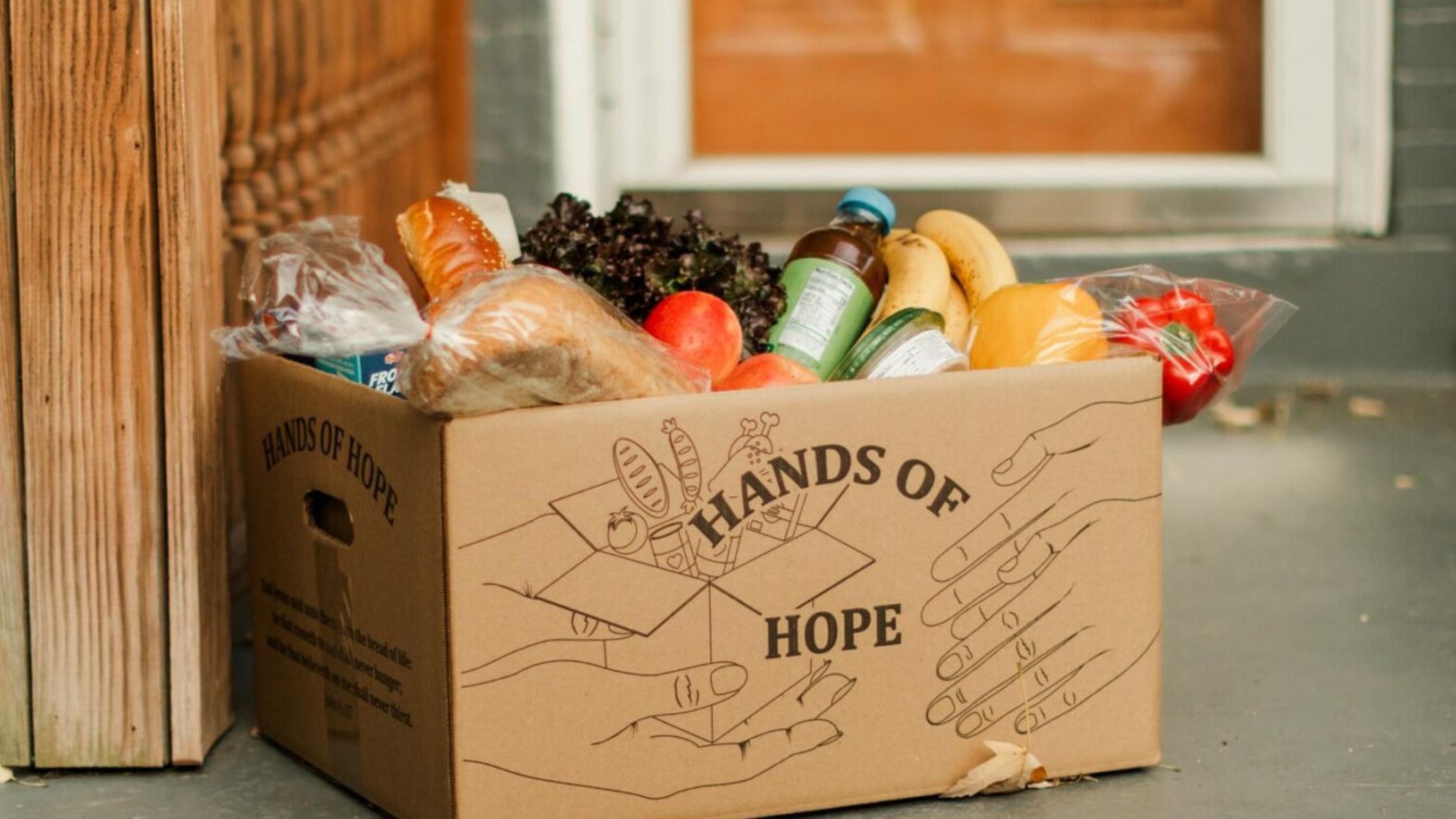
Four Families and a Semi-Truck Full of Food
There are four men (three brothers and a cousin) who were expelled from their Amish community for their faith. They believe in healing, in God’s grace—things their community would not accept. And so they were removed from everything they had known.
Four families with several children each. No plan for where to live or how to provide for them. They began sharing a single living space, pooling everything they had, some days without enough food to eat. The wives were creative with what little there was, and there were moments of what I can only describe as miraculous provision, when what should not have been enough somehow was.
It was in that season, in the vulnerability of not having enough, that God showed them something. There is no shortage of food in this country. The shortage is in distribution. Grocery stores dispose of food that has recently expired or is approaching its expiration date. Suppliers have products that cannot be moved because of transit complications. Companies have entire semi-trucks of fresh, usable food with nowhere to send it, not because they don’t want to help, but because no single food bank can receive and distribute a full truckload of perishable food. So the food goes to waste. And families go hungry. Both things are happening at the same time, in the same country, because the connection between them has never been built.
These four families had a God-given dream to build that connection. To create the infrastructure that could receive an entire semi-truck of food and distribute it to the people who needed it. The vision was clear. But they needed help learning to think at the scale the dream required and how to apply business principles/strategy to something that had been born in a season of hunger and was being asked to operate at a national level.
Being committed to implementing the business principles and strategies we shared, today Blessings of Hope is expanding at a rate that takes my breath away. They have had Ivanka Trump and Congressman Jim Jordan visit their facility. Their impact is global and I genuinely believe they are on a path to help solve hunger on a scale that those four families could never have imagined.
The whole process was not about money. It was about the specific, particular wealth that had been developed through the seasons. The return on seeds we planted into these families had nothing directly to do with us. But, the return is currently feeding people we will never meet, in places we have never been, through an organization that is still growing into what it was always meant to become.
This is what wealth deployed with purpose looks like. Not the transfer of money, but the transfer of everything you have been given, into the hands of people who have been given a vision that requires it.
Lay up for yourselves treasures in heaven… for where your treasure is, there your heart will be also. Matthew 6:20–21
“Treasures in heaven” is not a rejection of earthly resources or a spiritual argument against financial success. It is a reorientation of a purpose—an invitation to invest in what is eternal rather than only in what is immediate. And when that shift takes hold genuinely, motivation does not decrease. It expands. Because what you are building now is connected to something that matters beyond what you can see from where you currently stand.
This is an excerpt from an upcoming book that Dave and I have collaborated on addressing marketplace issues. We can’t wait to share it with you.
Looking at purpose driven wealth,
Karen Conrad Metcalfe